
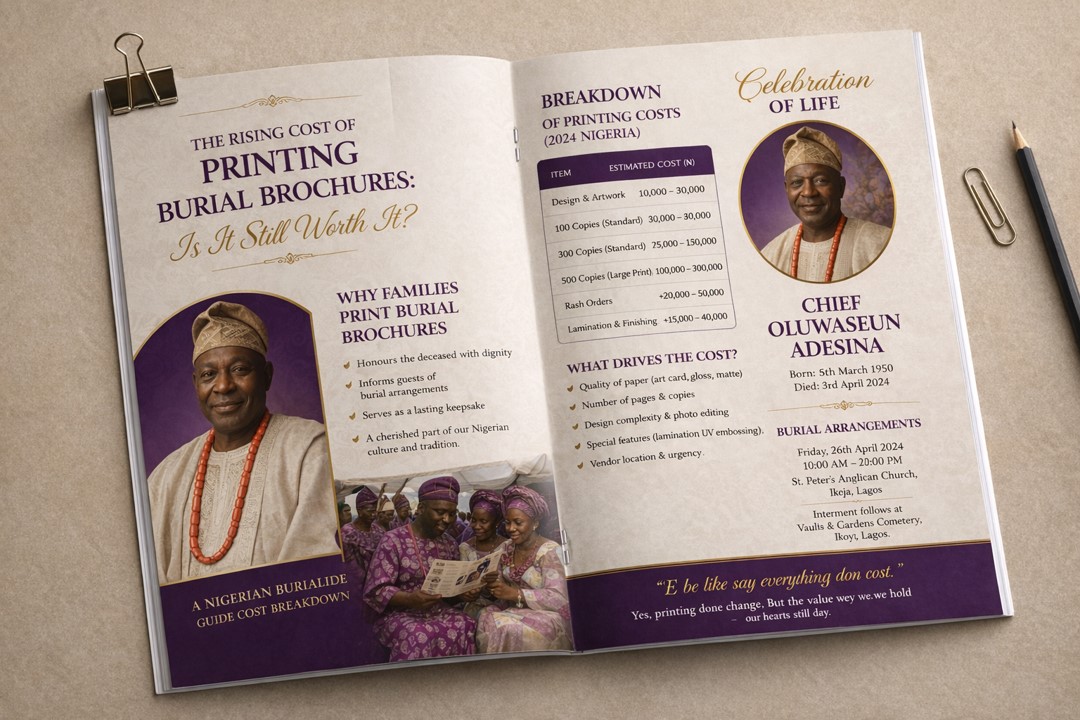
In many cultures, burial brochures have long been an essential part of funeral ceremonies. They serve as a guide to the order of service and a keepsake honoring the life of the deceased. However, in recent years, the cost of printing these brochures has risen significantly, prompting many families to reconsider whether the tradition is still practical.
The Increasing Financial Burden
Printing costs have steadily climbed due to the rising prices of paper, ink, and professional design services. For families already dealing with funeral expenses, caskets, venue arrangements, transportation, and catering, etc, the additional cost of producing hundreds of brochures can be overwhelming.
High-quality brochures, especially those printed in color on glossy or thick paper, can cost a substantial amount per copy. When multiplied by the number of expected attendees, the total expense quickly becomes a major financial commitment.
Quantity vs. Actual Use
One often overlooked reality is that many attendees have little long-term use for burial brochures. While they may glance through the program during the service, a large number of these brochures are left behind on seats, discarded shortly after the event, or forgotten over time.
For many people, the brochure serves a temporary purpose, mainly to follow the order of proceedings. Once the ceremony is over, its relevance diminishes, making the high cost of printing difficult to justify.
Waste and Environmental Concerns
The mismatch between the number of brochures printed and the number actually retained contributes to significant waste. Unused or discarded brochures add to environmental concerns, especially when non-recyclable materials or heavy ink are involved.
As sustainability becomes a growing global priority, reducing unnecessary printing is an important step toward more environmentally responsible practices.
The Pressure to Conform
Despite the costs, many families still feel compelled to print burial brochures due to societal expectations. There is often an unspoken standard that a “proper” funeral must include printed materials, even if it strains the family’s finances.
This pressure can lead families to spend beyond their means, prioritizing appearance over practicality.
A Shift Toward Digital Alternatives
With the rise of smartphones and internet access, digital burial brochures are emerging as a practical alternative. They offer the same information – sometimes even more – without the high production costs.
Digital versions can be shared easily via WhatsApp, email, or QR codes, allowing attendees to access the program on their devices. They also eliminate the problem of excess copies and provide a lasting, easily retrievable record.
Rethinking Tradition
Traditions evolve over time, and funeral practices are no exception. While printed burial brochures hold sentimental value for some, it may be time to reassess their role in modern ceremonies.
Families can choose a balanced approach, which is printing a limited number of copies for close relatives while making the full version available digitally. This preserves the essence of the tradition while reducing unnecessary expenses.
Conclusion
The rising cost of printing burial brochures, combined with their limited long-term use, raises an important question: are they still worth the investment? As more families seek cost-effective and meaningful ways to honor their loved ones, digital alternatives are proving to be a sensible and forward-thinking choice.
Ultimately, what matters most is not the medium, but the memories shared and the life celebrated.